
Download StuCred.
The Real Time Student Credit App.

How to Get a ₹30,000 Student Loan in India — Complete Guide

This guide helps students, parents, and recent graduates find, apply for, and manage a ₹30,000 student loan in India. It explains who needs such a small-ticket education loan, available lenders (banks, NBFCs, fintech), eligibility and documentation, how interest and fees work, and practical steps from application to repayment. If you need a short-term loan for tuition, a laptop, certification fees, or urgent exam fees, this guide covers options, including instant microloans, student credit facilities, and institutional advances — all tailored to 2025 lending norms and digital processes.

Who this guide is for and what “₹30,000 student loan” means
This guide is for:
- Students (Undergraduate, Postgraduate, vocational, certification) need a small amount of ₹ 30,000 for educational needs.
- And Co-borrowers or signers, like parents or guardians.
- Short-term financing for laptop purchase, exam fees, or upskilling courses targeting recent graduates and young professionals.
- College finance officers and student aid coordinators who help students access microcredit and scholarship advances.
What does a “₹30,000 student loan” mean
A ₹30,000 student loan is a small-ticket education loan designed to cover specific expenses such as a laptop, books, short-term course fees, one-time exam registration, or a college emergency fee. In contrast, a normal education loan, which stretches into lakhs as compared to a ₹30,000 loan, is generally:
Duration: usually 3–24 months.
Ease of documentation: A few fintech lenders and NBFCs also provide almost instant disbursal with a few documents.
Commonly unsecured: most education lenders classify small education loans as unsecured microloans; a few banks may require a co-borrower or a small property.
Wide range of APR variability: The availability of interest rates can be wide-ranging based on the lender type, profile, and tenure of the borrower
Common use cases: Examples (tuition, course fee, exam fees, books, laptop)
- Purchasing a laptop or tablet for studies
- Covering semester or exam fees in case of delays in grants/scholarships.
- Fees for enrolling in a short certification or any other professional course (online or offline).
- purchase coursebooks and lab materials; pay fees for a study tour.
- Academic year emergency travel or hostel charges
Hence, small-ticket needs must be funded through short-term education finance if students want to keep their educational costs down, with risk involved even at a subsidized rate.
Read more
Overview of lending options for ₹30,000
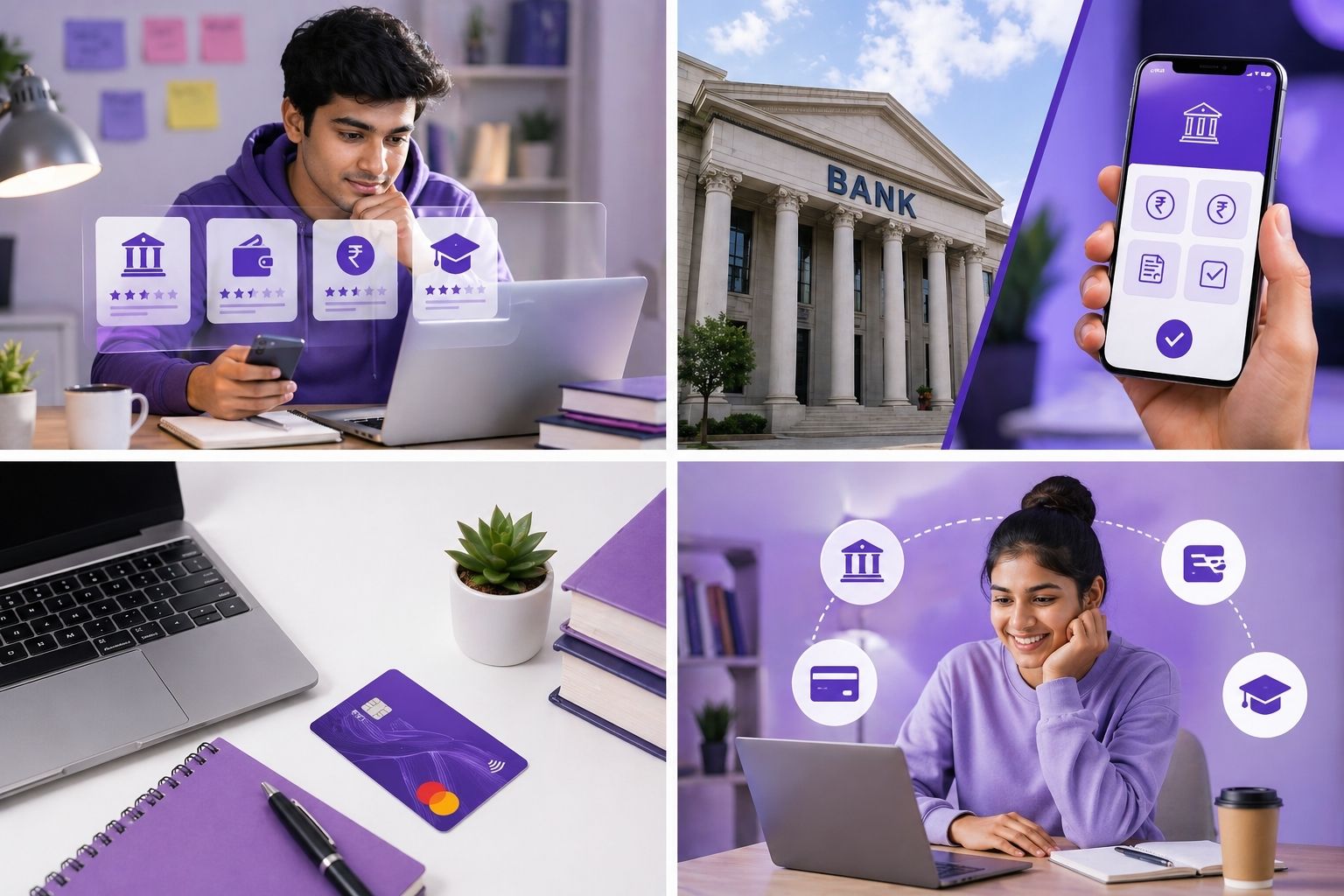
There are various lending channels to avail an education loan of ₹30,000. There are upsides and downsides to speed, cost, and documentation for each.
Bank (private and public) — Features of Small Education Loan
Student loans are extended by public-sector banks (State Bank of India, Punjab National Bank, Bank of Baroda, etc.) for full course funding, as well as by private banks (HDFC Bank, ICICI Bank, Axis Bank).
Government banks: Standard education loan products, usually with a minor emergency advance and priority branch schemes. Interest is usually snooty; lending could be slow-moving. Co-borrower (typically a parent) needed; some plans provide interest subsidies upon qualification.
Private Banks: More likely than standard banks to do fast processing and digital applications. Usually, exclude the ultra-small loans. Banks provide personal loans for education or a retail EMI option. Turnaround time and processing fees differ.
Advantages: regulated, clearer terms, lower stigma on default, easier to access subsidy schemes
Cons: More documentation, lengthier verification process, minimum ticket sizes/tenures.
Micro education loans by NBFCs and fintech lenders
NBFCs and fintech apps provide small-ticket, fast-disbursal loans for students or young professionals.
Features:
- Provides immediate or suturing disbursal to verified coyotes.
- Tenures of more than a few months and up to two years in length are relatively small.
- No Documentation — Aadhaar, Admission Proof, and only the co-borrower’s KYC will be done in certain scenarios
- Higher APRs than public banks, although competitive for short tenures.
Popular fintech features: Quick Aadhaar/eKYC for KYC in minutes, EMI scheduler (app), loan agreement (in-app), integration of pay-later course platform, Find providers with instant student loan 30000 queries for fintech education loan 30000.
Student Credit Cards, EMI on education platforms, and pay-later options
Student credit cards — These are the kind of credit cards issued by Banks and NBFCs that usually come with a low limit as well as rewards. Well-suited for acquisitions such as laptops or course subscriptions. Basic KYC may be required, and the money transfer limit could be below ₹30,000
EMI: E-commerce and education platforms often offer conversion options at checkout (card or no-cost EMI promos) that break ₹30,000 into monthly repayments, with no interest if partnered with banks/fintech.
KYA: Online course pay-later services (KYA, BNPL): Short or term loan options for interest-free/low-interest online courses; processing fees may apply, refer to merchant agreements
Scholarship advances, crowd-funding, and interest-free institutional loans
Scholarship advances: Some institutes or scholarship portals offer advances against confirmed scholarships. Lower cost; limited availability.
University loan funds or college loan funds: Some universities run small emergency or short-term loans for students in crisis, or campus credit cells through which they disburse interest-free loans of ₹30,000 (or the same ₹30,000) usually at subsidized rates.
Crowd-funding and alum funds: Good solution for one-off specific needs; can be slow and unproven.
Interest-free loans from Institutions: Available through some Government or Private colleges for students already enrolled there and needing them
Choosing the right option
Fintech/NBFC microloans for urgent needs and fast disbursal, pay-later/EMI
On the lower end of interest and formal security: again, public banks, subsidy schemes, or university loan cells.
To purchase equipment: a student card or EMI-on-platform is frequently the most cost-effective short-run path.
Eligibility and documentation for small student loans in India
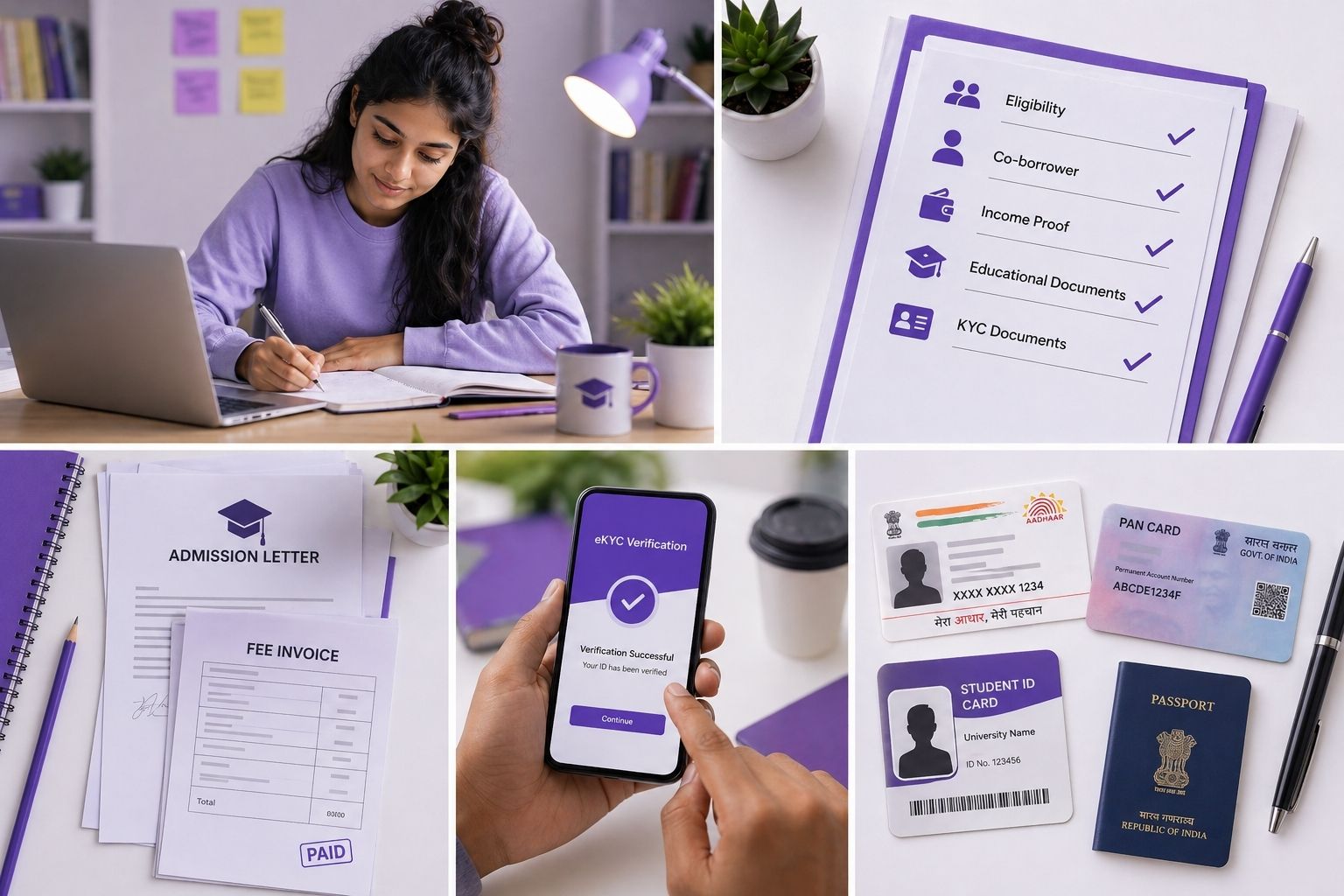
Understanding eligibility and preparing documents speeds approval. Small loans often have lighter checks, but lenders still verify identity, enrollment, and repayment capacity (via co-borrower income if the student has no income).
Who is Eligible (Age limit, Course-wise, Co-borrower)
Common eligibility components:
Age — Typically 18–35 for the borrower; the co-borrower may be older.
Course Types: degree, diploma, or certified courses from recognized universities/institutes/reputed online providers. Fintech lenders accept short-term certification courses.
Proof of enrolment: Admission letter or fee invoice
Co-borrower: For students with limited or no income history, a co-borrower (parent/guardian) is required by most banks and NBFCs. Some fintechs would lend ₹ 30,000 without a co-borrower.
Credit Score: Identify an eligible co-borrower; lenders offer credit based on the co-borrower’s CIBIL score or credit score (BOTH). Some lenders use alternative data (education, academics, social footprint) for underwriting.
Self-income documentation for Parents/co-borrowers (salaried, self-employed)
Salaried co-borrower documents typically required:
- Recent salary slips (1–3 months) or a certificate from your employer
- Latest Form 16 or Income Tax Returns (ITR) for the last 1–2 Years
- Your Bank account statements for the last 3–6 months with salary credits.
Self-employed co-borrower documents:
- ITRs for the last 2–3 years.
- If requested — Profit & Loss and Balance Sheet
- GST Registration Certificate/[Letter where applicable.
- 01 — 06 months bank statements.
Some microloan and fintech lenders will let you submit simplified income proofs: bank statements, employer ID, or digitally verified salary APIs. Apart from small loans, few lenders accept a self-declared co-borrower with minimal KYC.
Educational documents needed (Letter of Admission, invoice fee)
Essential educational documentation:
- An admission document from the college or institution.
- Demand note or invoice for fees (tuition, exam fee, laptop).
- Brochure of the course or confirmation of the online course (for short-term programs).
- A student ID or a letter from the institution
- Additional validation or embassy/consulate documents are required for foreign study or distance learning.
- Digitize or photocopy originals; most lenders accept electronic uploads.
KYC, Aadhaar, PAN & student alternative IDs (if no PAN)
Core KYC for lenders:
Aadhaar: Primary identity and eKYC – many fintech/NBFCs.
PAN: Essential for taxable loans and most financial institution processes. Many lenders will allow students under 18 or those without a PAN to use a parent/co-borrower’s PAN.
If PAN is not available, alternative IDs are:
- Identity proof- Voter ID, passport, or driving license.
- For small fintech loans: Student ID + parents’ PAN + Aadhaar.
- Aadhaar-based authentication and bank linkage (account verification) replace PAN for some lenders on sub-₹50k loans.
Guide to quick documentation for faster disbursals
Tips to speed processing:
- Store soft copies of Aadhaar, PAN, and co-borrower ID, along with bank statements and admission letter info, as readable, high-res PDFs or clear photos.
- Auto-populate forms & Validate data (e.g., name spelling, DOB) to prevent KYC mismatches.
- Get KYC for co-borrowers and their approvals scanned before applying.
- Lenders who offer eKYC and e-sign help you complete the paperwork immediately.
- For salaried co-borrowers, request a salaried certificate or an employer letter to facilitate verification.
- Keep the entries on your bank statement clean (clear any unexplained debits or credits that could hinder underwriting).

Best lender types and recommended lenders for ₹30,000
Pros and cons of small loans from public sector banks
Pros:
- Many schemes have led to reduced interest rates.
- Government subsidies and interest concessions availability (Central/ State schemes), as per the eligibility.
- Clear terms and strong grievance redressal.
Cons:
- Most public bank education loan schemes have minimum ticket sizes (usually higher than ₹30,000); there are smaller “emergency education advances,” but they tend to be branch-specific.
- Branches are taking longer for physical paperwork and verification.
- Borrowers without credit history may face strict co-borrower and collateral policies.
When to use: If you or your co-borrower qualify for a subsidy, need the lowest possible APR, and can afford a longer process timeline.
Traditional Banks
Pros:
- Enables digital onboarding, faster sanction times, and ease of customer experience.
- Roll of flexible product mix ~ personal loan education or retail EMI laptops.
- Lure in Tie-Ups to Student Credit-Cards and No Cost EMI Offers
Cons:
- Higher interest rates on small unsecured amounts than public banks, plus processing fees.
- Some private-sector lenders have minimum ticket sizes – inquire whether they even consider small education loans.
Who to go for: If speed, digital paperwork, and post-sanction branded support matter.
NBFCs and Fintech apps — instant disbursal and fewer documents
Pros:
- Microloan products tailor-made for students: instant student loan 30000, app-based KYC, and e-sign.
- Super quick approval: minutes to same-day
- Accept non-standard credit signals (schooling, schooling history, social information).
Cons:
- More expensive in terms of APR than banks, but short-term can make the entire cost reasonable
- Some smaller fintechs are known for opaque fee structures — (terms matter).
Recommended fintech/NBFC approaches:
- Prefer existing platforms that are NBFC registered, disclose APR upfront, and have good app ratings
- Use aggregator apps to compare offers (based on APR, processing fee, and EMI schedule)
Co-operative banks, campus credit cells, and university loan schemes
Individually based support providing competitive rates specifically for students across the community, ample time to assess branch involvement, and KYC requirements.
Campus credit cells: Many colleges partner with banks or operate their own credit cell to help students apply for and receive quick, campus-verified loans.
University-supported systems: May offer immediate interest-free or low-interest short-term advances for emergencies.
When to choose: If your institution has a campus credit facility or alums loan fund, this is usually the quickest and cheapest alternative.
APR Comparison processing fees, prepayment charges, and small loans
What to compare:
- APR (Annual Percentage Rate): represents interest plus any fees required to be paid, the best single measure for cost comparison
- Processing fee: treated as a flat or a percentage charge upfront; for ₹30,000, a flat fee is more impactful.
- For instance, if you are borrowing a loan for a shorter period of time, you may need flexibility to pay off the amount before maturity without any charge, and among these are Prepayment/part-prepayment charges
- EMI frequency and tenure options
- Fees for late payments and GST on fees.

Interest rates, fees, and total cost calculation for ₹30,000
Understanding true cost avoids surprises. Effective cost can be appreciably modified by processing fees and GST for small loans.
Typical interest rate ranges for small education loans in India
Public Banks: For eligible borrowers (with subsidies), effective interest could be 6–10% for small sanctioned advances or subsidized schemes, but in general, about 9–12% for standard education loans.
Private banks: 10%–18%, depending on the person, for unsecured loans or personal loans for enrollment.
NBFCs/fintech: 12–30% APR on unsecured microloans; shorter tenures generally reduce total interest even if APRs are higher.
Pay-later and Credit card EMIs: Usually offer an interest-free period (if it’s not an EMI scheme); otherwise, card interest rates can be 24%+.
Processing fee, documentation charges, and GST
Processing fee: 0.5%–2.5% of principal or flat fee. Flat fees of ₹500–₹1,500 are common with fintechs for a one-off loan of ₹30,000; banks may charge 1%+.
Doc/Veri fee: negligible (often no during the Digital loans).
How to calculate the effective interest rate and select the shortest economic tenure
Fully loaded APR: Turning one-time fees into an annualized percentage and costs to the stated APR. The actual expense is determined using any number of online calculators or spreadsheet formulas (e.g., IRR).
Since higher EMIs imply a lower Interest Rate in the long term, short-term loans, in fact, have a lower minimum cost of repayment. Cutting tenure from 24 months to 12 months (without a difference in APR) will save interest rates regardless of the rate for the 12-month.
General rule: If available, go for a 6–12-month EMI, which is often the cheapest, total-cost-wise. Try scenarios with the student loan EMI calculator for 30000 and take the processing fee and GST into account when comparing.

Step-by-step application process (online and offline)
A structured application reduces delays. The online route and the offline process are given below.
Student score basics
Pre-application checks:
- Documents: Aadhaar, PAN (or a parent PAN), admission letter and fee invoice, bank statement, and KYC of the co-borrower.
- Co-borrower permission and phone number
- Co-borrower credit score check>650 CIBIL for best offers
Credit basics:
A credit history is needed for co-borrower credit. If the student has a credit or a previous loan
Fintech lenders could use alternative credit data — such as maintaining a stable mobile number, email, and linked bank account — to assist with scoring.
Implementing online application flow — Document Uploads, KYC, and e-sign
Typical online steps:
- Select lender + product; enter loan amount (₹30,000) and preferred tenure
- Enter the applicant’s and co-borrower’s basic information (name, date of birth, contact info, income).
- Documents to be uploaded: Aadhaar, PAN, admission letter, fee invoice, bank statement
- eKYC: Only Aadhaar OTP or video KYC where applicable.
- Aadhaar OTP or digital signature to e-sign loan documents
- Sanction letter sent by email/app; accepted terms & selected mode of disbursal
- Disbursal: funds disbursed to the student/college or into bank accounts, subject to the lender’s policy.
Pro Tip: Work with lenders that offer eKYC + e-sign — This will help you process loans faster.
Offline bank branch
Offline steps:
- Go to the branch with the printed application from here and originals for verification.
- Provide info on co-borrowers; request a meeting with the loan officer.
- Log provisional sanction letter and tentative dates for verification
- Keep following up; share more documents at the earliest.
Tips to expedite:
- Carry complete documents in an arranged manner & originals for speedy verification.
- Keeping a track of your verification by using the bank’s branch manager or education loan desk contacts
- Look for a branch tie-up or earlier successful disbursal at the campus.
Typical timelines — sanction, verification, and disbursal
Fintech/NBFC online: Few minutes — 48 hours, depending on KYC and verification
Private banks (digital): 1–5 Business Days, in case the documents are complete.
Public banks/offline: usually between 7 and 21 days, more if extra verification or subsidy processing needed
Campus schemes– generally within the same day or 3–5 days
What to do if your application is rejected — quick appeal fixes
Common reasons for rejection:
- Incomplete or inconsistent documents.
- Home equity, poor co-borrower credit history, or income visibility.
- Name/DOB mismatch across documents.
Quick fixes:
- If the student does not have a PAN, then use the parent PAN to make changes – Document upload or download again.
- Introduce a more robust co-borrower / guarantor
- Accommodate the request by reducing tenures or making use of EMI conversion
Appeal:
- Ask for a written reason for your rejection, and go to the branch/customer support.
- Clarification: type more or upload the recent bank statement
- Apply with another lender or fintech that evaluates other credit data.
Co-borrower, collateral, and guarantor rules for small loans
Small education loans have more flexible collateral and co-borrower requirements than larger loans.
Profile of a typical co-borrower and the case where a co-borrower is needed
Prerequisite: Banks usually require a parent/guardian to co-sign for applicants who have minimal credit history. They can also use the same platform, and fintech lenders would even waive this for a small fee.
Typical profiles: Salaried or self-employed parent, spouse (for married students) / guardian with stable income.
Co-borrower obligations: Jointly liable for repayment; defaults affect their credit score.
Collateral vs Unsecured ₹30,000 Options
Unsecured: Fintech microloans and pay-later services for ₹30,000 or small loans from NBFCs.
Collateral: Rare at these humble denominations, but a fixed deposit lien or small pledge is sometimes accepted by co-operative banks in return for cheaper rates.
Options for collateral: cheques that are written out with future dates, auto-debit mandates on bank accounts, or guarantees from institutions.
Guarantor Responsibilities and the Law
Guarantor: A person who legally promises to pay if the borrower or co-borrower defaults.
Guarantor can sue and be sued by the lender in the event of default; protect those acting as guarantor by ensuring proper housekeeping on obligations.
Guarantors are rare for small loans, with lenders preferring co-borrowers in such cases.
For the Co-Borrower Alternatives (institutional validation, scholarship letters)
Sense of validation from institution: College/University or course provider letter confirming enrollment and fee schedule reduces perceived risk.
Scholarship confirmation: Some lenders will accept a scholarship offer (if one exists) as collateral, or they even give you a loan in advance up to your current scholarship.
Employer sponsorship: Working students can use their employer’s educational benefits and salary deductions to serve as a co-borrower.
Repayment strategies and managing small education loan EMIs
Repayment planning saves you from default and interest burden as well
Selecting Tenure Enough to Maintain both Reasonable Monthly Payment and Interest Cost
Less tenure – more monthly EMI but less total interest. If the monthly cash flow permits ₹30,000, 6–12 months is often ideal.
A longer tenure means lower EMI but a higher total interest payment and more fees — do not extend small loans beyond necessity.
Tactic: Run an EMI planner to see which 6-month/12-month plan works for you and go with the lowest comfortable term.
Prepayment, part-prepayment, and penalty rules
For small-ticket loans, most lenders allow part-prepayment free of charge; some banks levy a nominal fee for prepayment on fixed-rate loans.
Fintech lenders usually allow foreclosure/part payments at no cost — read the loan agreement.
If you anticipate receiving a one-time (scholarship or stipend) payment, pay it in advance to avoid paying interest. Check whether the prepayment is on principal only or includes a prepayment penalty and GST.
Opt for auto-debit, set reminders, and do mobile banking to repay on time
- Enable auto-debt/NACH from the salary accounts of co-borrowers or the bank account of students to ensure that no EMI is defaulted on.
- Set SMS/email reminders through mobile banking or lender apps.
- Monitor for EMI dates; the payment date would be adjusted once the salary/allowance cycles change
- For credit card EMIs, ensure enough card limit, but make minimum payments on time
The impact of not paying an EMI — implications and rehabilitation solutions
Consequences of missed EMI:
- Fees for payment belatedness, and department interest
- The co-borrower’s credit score falls; large delinquencies can turn into grabbers, with a court case, maybe a court case
Rehabilitation:
Disclaimer to the Lender immediately: a one-time EMI reschedule, moratorium, or restructuring for a genuine hardship is available from many lenders.
Demand EMI rescheduling for short-term cash flow issues, or lower EMI to prolong tenure (if not expensive).
Do not pile up defaults; establish an immediate other fee (partial), and renegotiate the schedule.
Feeding up small loans, which attract tax benefits (Section 80E) — Analyzing eligibility and the process of claiming
- Interest paid on education loans in respect of any higher education loan shall be allowed for deduction under Section 80E only to the person paying such interest (i.e, co-borrower/parent), subject to conditions.
- What Courses/Programs Qualify: Higher education programs (Degree/Diploma) in India or abroad; short course certifications are at the discretion of a tax advisor.
- Allowed solely on the interest part, for 8 years or until the full payback of interest.
- Maintain interest certificates issued by the lender and include a repayment schedule to file the deduction.
Special schemes, subsidies and government/college-based options in India
Education loan subsidy schemes of the central and state governments applicable to small loans
Central Schemes: The interest subsidy schemes of the Central Government remain most suitable for full-term education loans for low-income families, with microloans unlikely to avail benefits under these measures, per portal information from Vidyalakshmi and applicable circulars of the Ministry.
State schemes: Most state governments have an education assistance or interest subvention scheme for residents. Small contingency grants or no-interest loans are offered in some states through state education boards.
Convenient act: Speak to the state education department or the student welfare office about eligibility for minor urgent loans or allowances
Priority schemes (e.g. Vidyalakshmi portal) about Bank-specific student loan schemes
Vidyalakshmi portal: A single window to access and apply for several bank education loans (primarily standard education loans). Provides a comparative view and finds subsidized products. May not display fintech microloans.
Bank priority schemes: Other banks offer products, e.g., ‘Student Plus’ or ‘Education Advance’, for small sums with nominal interest or sometimes to cover urgent fees — do ask at your local branch or on the bank’s website.
Campus tie-ups: Banks tend to have special offers for students enrolled at universities with which they collaborate, including reduced processing fees and accelerated verification.
Strengths: University-assist loan funds and alums assistance
- Most institutions offer emergency loan funds, alumni-based grants, or temporary no-interest advances through student-need resources.
- Seek information from the student affairs or finance office about how to apply and what the turnaround time is.
- Graduate loans, with mentoring support and flexible repayment, are a relatively cheap alternative for market accreditation.
- Scheme scholarships, fee waivers, and one low-rate institutional credit
- Institutional policies at many institutions allow confirmed awards to be advanced against scholarships; these advances typically bear no interest or a very low interest rate.
- Colleges are also allowed to make direct payments over time, which could have been the same.
- Some private institutions join forces with the bank/fintech companies to provide subsidized education loans for their students.

Safety, scams to watch for, and consumer rights
Be aware of fraudulent lenders and know your rights.
Education Loan Scams and Warning Signs of Other Common Fraud Crimes (advance-fee frauds, organizations impersonating legitimate lenders)
Red flags:
- Lender requests a huge upfront fee to “process” the loan.
- Unregistered entity, no business address, or poor web presence
- Funding guarantees (with no KYC and no credit is granted).
- High-pressure manipulative tactics, “exclusive,” which are only offered for a limited time, require an immediate investment.
- Do not share: OTPs, Bank credentials, or Video KYC to anybody outside the Lender portal/app.
Check your lender credentials and NBFC registration
Verify RBI/SEBI/NBFC verification: The list of registered NBFCs is maintained by the RBI. Also, verify registration numbers and licenses.
These are a few things you can look for to check documentation related to corporate identity: GSTIN, GST invoices, registered office address, and customer support numbers.
Review user feedback on app stores & social media; Verify complaints on consumer forums.
Instead of unknown marketplaces, try established aggregator platforms to check only regulated lenders.
Rights under RBI and Consumer protection, escalation path for complaints
- Grievance redressal with RBI: Every bank/NBFC is required to appoint a nodal officer and maintain a grievance redressal mechanism; in case of escalation, approach the lender’s nodal officer.
- Banking Ombudsman If the bank does not resolve, go to Banking Ombudsman.
- NBFC complaints: RBI’s online grievance portal (applicable to NBFCs) or escalate the same through consumer courts
- Maintain proper documentation of every correspondence, sanction letters, receipts, and loan agreements
Workout document retention — reading checklist for loan agreements
Lenders are also required to keep copies of the signed loan agreement, loan sanction letter, amortization schedule, fee receipts, and communication logs.
Read the checklist:
- Annual percentage rate (APR) and effective interest rate inclusive of fees & GST
- Prepayment/foreclosure charges
- Late payment penalties
- Collateral/co-borrower clauses
- Disbursal method & restrictions (e.g., direct to institute)
- On promise, sign on blank papers; deal terms aligned with the verbal promiser.
How to choose the right option in 5 minutes — decision flowchart
Quick questions to ask yourself (urgency, tenure, co-borrower availability)
1. How urgent is the money? Immediate (within 24 hours) / Short (1–3 days) / Can wait (1 week+).
2. Purpose of funds? Equipment (laptop), course fee, exam fee, books.
3. Can a parent/guardian co-borrow or sign? Yes / No.
4. Do you have access to a no-cost EMI (merchant) or student credit card? Yes / No.
5. Repayment comfort: Can you repay in 6 months comfortably? 12 months? 24 months?
Recommended lender type based on answers
- If immediate + no co-borrower: Fintech microloan or pay-later (instant student loan 30000).
- If immediate + co-borrower available + lower cost desired: Private bank digital loan or campus credit cell (fast with co-borrower).
- If buying a laptop via merchant with EMI offer: Use merchant no-cost EMI or student credit card.
- If repayment comfortable in longer tenure and low rate matters: Public sector bank or co-operative bank with co-borrower.
- If scholarship confirmed: Seek scholarship advance or institution loan first.
Next steps
- Step 1: Gather ID, admission letter and co-borrower docs (5–15 minutes).
- Step 2: Use an aggregator or lender app to compare APR, processing fee and tenure (10 minutes).
- Step 3: Apply online with eKYC and e-sign for fastest approval (10–30 minutes).
- Step 4: Set up auto-debit and mark EMI calendar; retain copies of the sanction letter and amortisation schedule.